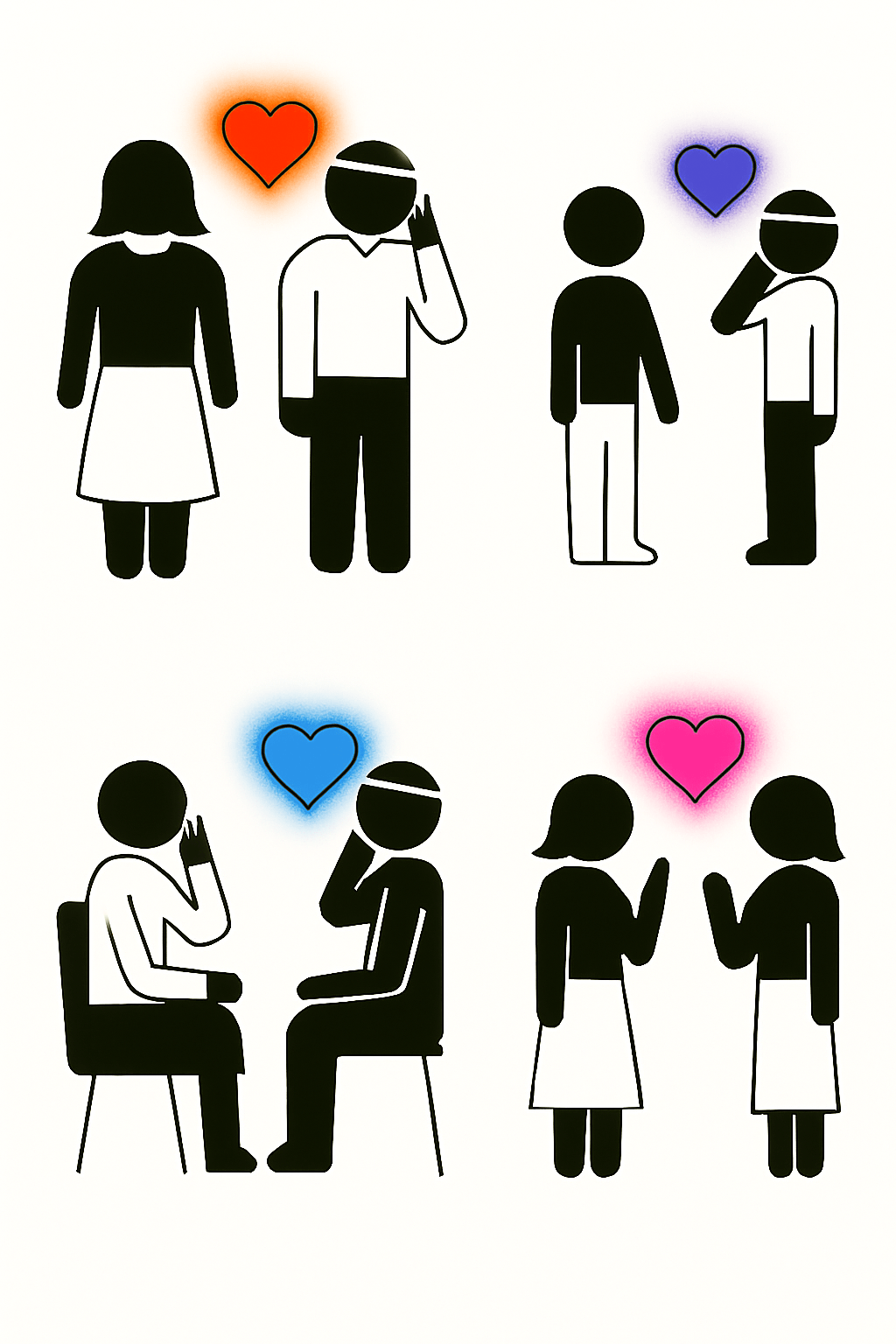
Relationships makes life rich and give it meaning. I often muse that the greatest human experience might be feeling connected to another person. Sharing emotions is the foundation of that connection. When two people speak, the facts they exchange matter less than the feelings behind them. When they trade thoughts and feelings it allows them to truly connect.
There are two aspects to a connective conversation. One part takes place on the side of the speaker, the other from the listener. The speaker should express more than facts. He should aim to share thoughts and feelings. What makes a conversation transformative is the second part – how the listener responds. When the listener takes in what the speaker feels and understands it, the connection between the two of them deepens. This response demonstrates empathy, which is the ability to sense another person’s emotions, let them affect you, and show them that you are affected. It is what turns an interaction into a shared human moment. Relationships need both parts of this dynamic to thrive, the willingness to share and the capacity to empathize.
In some relationships, such as between spouses, it is ideal for both partners to share and listen in turn. In others, like between a teacher and a student, one person might share more while the other mainly listens. Yet the dynamic is similar. When someone expresses emotions and she is met with empathy, the relationship grows stronger and more alive.
Why does empathy matter so much? There are at least three reasons.
First, when you struggles with a painful emotion, empathy lightens your load. It becomes as if four shoulders are carrying your burden, instead of two. The emotion doesn’t disappear, but it becomes easier to bear. Similarly, happiness often feels more real when you express it to someone else. Share your joy and it multiplies.
Second, empathy shows the speaker that you are truly listening. People often wonder if others are really paying attention to them. Demonstrating empathy removes that doubt. When your emotional response matches the other person’s feeling, it confirms to them that you understood what they said and what they meant.
Third, and perhaps most profoundly, showing empathy communicates to someone that they matter. When you let another person’s feelings touch you, you are giving them a message. You are saying, “Your feelings matter to me, because you matter to me.” That is the foundation of human connection. Empathy conveys to someone that they are not invisible. Their inner world has a place in your mind. That sense of being seen and felt by another person is one of life’s very rewarding experiences.
True connection does not come from clever words or shared opinions. It grows from the willingness to listen with an open heart, to allow another person’s emotions to enter your own life, and to let them know that they matter.
Sometimes this type of listening is called “empathic listening.” Ironically, it is so central to true listening that it is almost redundant. It might just be called “listening.” True listening cannot be effective without including empathy for the other.
You might notice that you have good listening skills, but people sometimes criticize you as not listening to them, or not understanding them. It is possible that they are sensing a gap in either your empathy, or how you show it to them. It can be helpful to working on allowing yourself to feel their emotions. Being empathic does not mean agreeing to the other person’s thoughts, feelings, or reactions. It means understanding how they feel and why they feel that way. Allow and encourage them to share their feelings with you and to get the message that they are understood.
If you would like to improve your relationships and feel more connected, try improving your ability to empathize. The people that talk to you will feel it. Chances are that you will, too.
 Rabbi Shmuel Maybruch's Blog