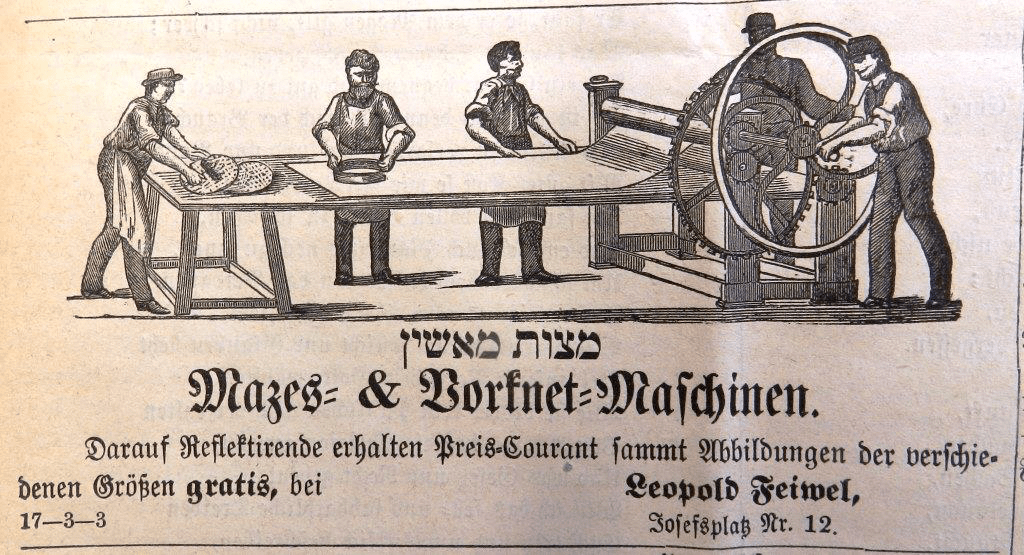
An innovative matzah, that is both surprisingly affordable and tasty, entered the market several years ago. The matzah comes from a commercial bakery in Sderot called Birchas HaPesach, and is sold in communities in Israel and the United States. It is most widely available in Osher Ad stores in Israel and in their Bingo outlets in the US. This matzah is significantly less expensive than other hand matzos. It is usually priced at under $15.00 a pound.
At first glance, this matzah appears to be traditional hand matzah. In most ways, it is. The bakery emphasizes that the matzah is produced with manual work. At the same time Birchas HaPesach has introduced two practical innovations that allow it to scale output and offer the product at a lower price than many small hand bakeries.
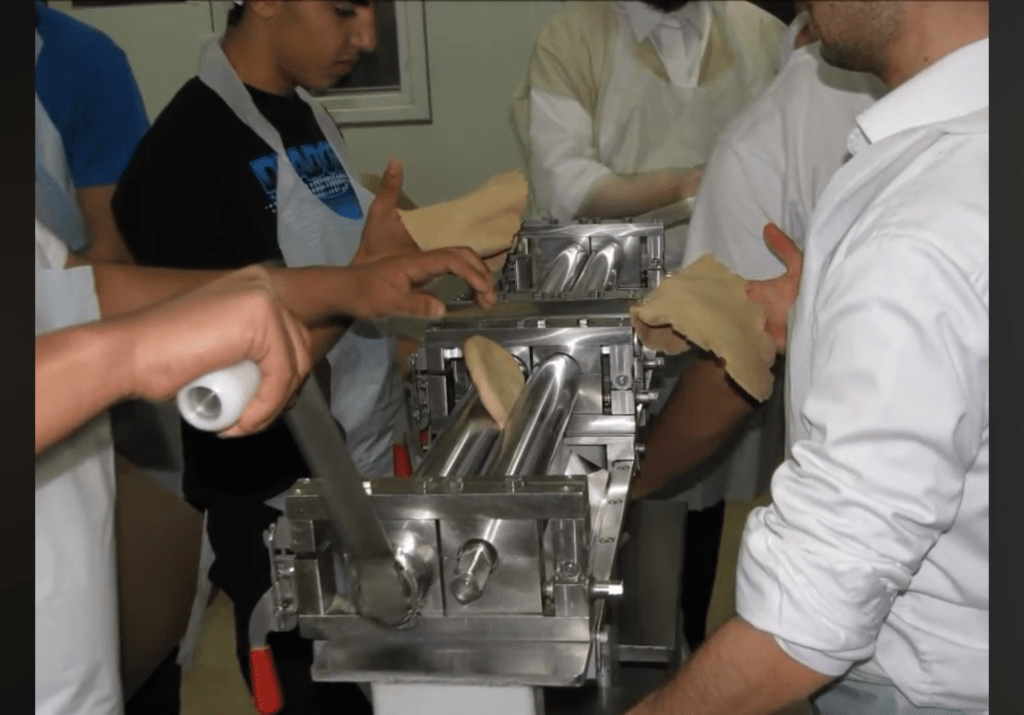
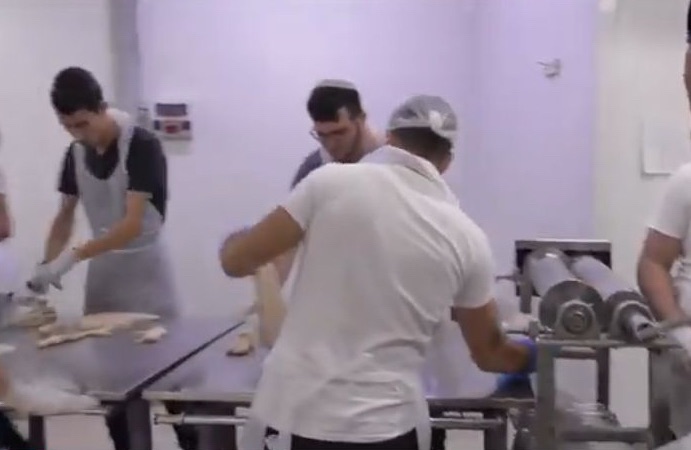
The first innovation is that they use a simple stainless steel rolling apparatus to roll the matzah. This basic device consists of two metal rolling pins mounted sideways. Bakers place small pieces of dough into the basic machine and then turn a handle on the side to roll and squeeze the dough into matzah. Below is a screenshot of the rollers from a video produced by the factory. The result is a uniform thin matzah that resembles other hand rolled matzah. The machine produces consistent results and reduces the physical strain on workers, while preserving the look and texture associated with hand matzah.
The second innovation is a large commercial gas oven with a metal mesh conveyor belt. Bakers place the rolled matzah into the oven by hand. The matzah travels across the oven on the mesh, and emerges fully baked on the other side, without the need for manual removal. This contrasts with the traditional small bakery model, where a specially trained person stands at the oven inserting and removing each matzah by hand. The conveyor oven increases output and allows many matzot to be baked simultaneously.

These technical details raise an important question in halacha. Is this matzah considered machine matzah or hand matzah? That matters because of the debates about the kashrus of matzah when machines have a role in producing them.
When machine matzah was first introduced almost two centuries ago, it provoked strong responses. Some leading poskim opposed the new method, while others supported it as being halachically efficient and cost-effective. Those that were opposed to machine matzah published a pamphlet called “Modaah L’Beis Yisrael.” Those that were in support published a counter pamphlet called “Bitul Modaah.” Both are available together here. The critics argued that machines could undermine the requirement of lishma, which is the intention that the matzah be made specifically for the mitzvah. Early machines also introduced delays and pauses in the production process, which raised an additional concern. You can find a summary of the multifaceted debate and its history in the article available here. Over time, the debate became largely aligned with broader communal lines. Many chassidic communities continue to avoid machine matzah, while many non chassidic communities accept it. Some Ashkenazic communities, such as Khal Adath Jeshurun, have traditionally even preferred machine shmurah matzah for the Seder.
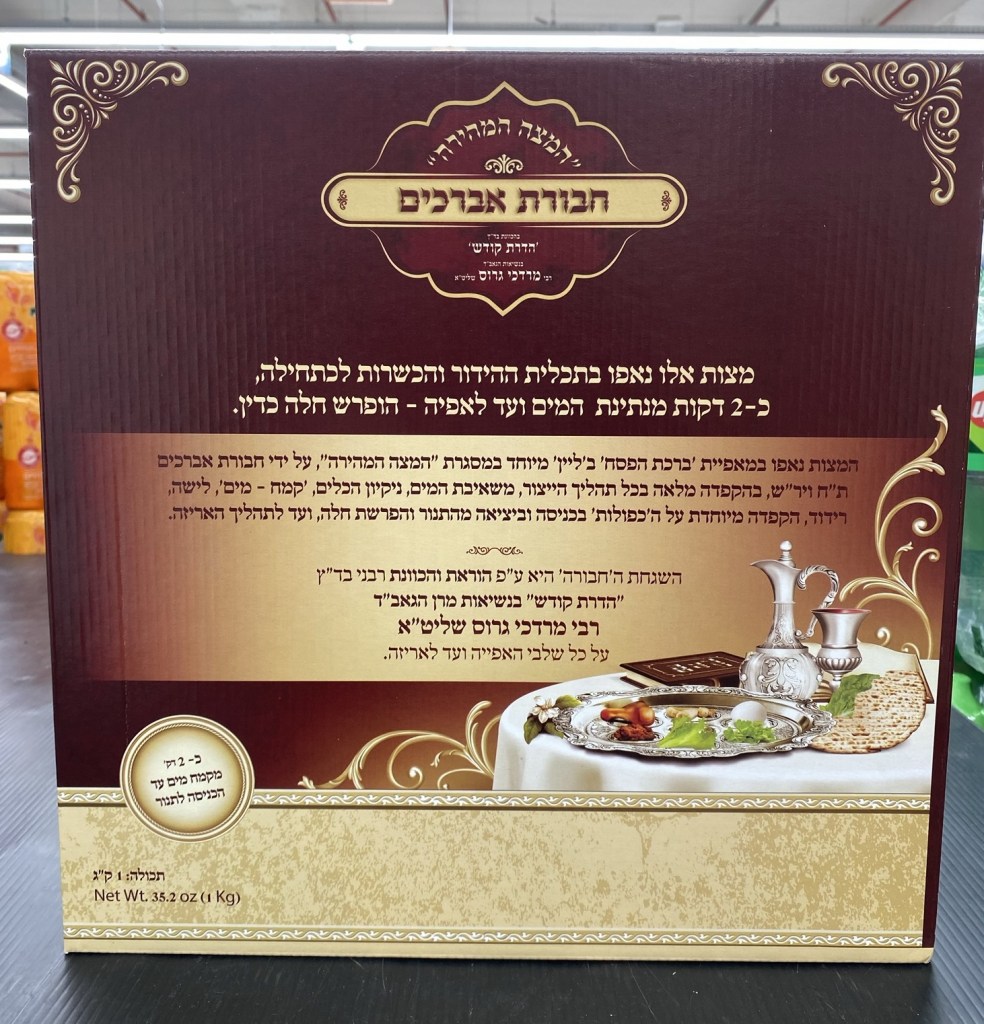
The Birchas HaPesach bakery maintains that the essential parts of the process are performed lishma. The dough is mixed and kneaded by hand, like in other hand matzah bakeries. The rolling apparatus is only used subsequently. The conveyor oven also bakes the matzah that has been placed into the oven by hand. The company even advertises that it follows a stringency associated with the Chasam Sofer which requires that the entire process, from mixing to baking, be completed optimally in under three minutes. This is a little practiced chumra that aims to rush the process to ensure that there is no possibility of creating chametz. Below is a picture of the box. Notice the statement about the Chasam Sofer’s stringency on the left side.
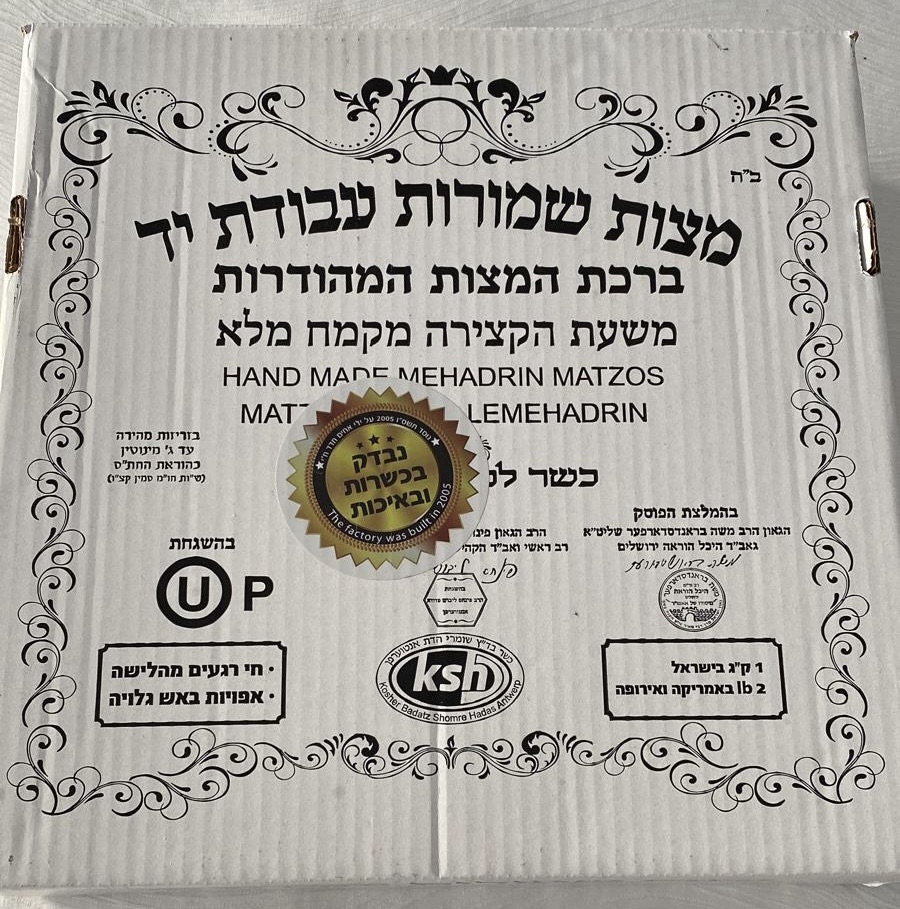
Birchas HaPesach has published endorsements and statements from rabbinic authorities. Some consider its product equivalent to traditional hand matzah, as is visible on the picture of the box, above. The bakery has also produced a pamphlet that documents historical practices of making hand matzah in many communities, available here. The pamphlet demonstrates that even groups that historically opposed machine matzah sometimes permitted the use of rolling aids to ease the work of dough preparation. Despite these endorsements, some communities maintain a firm minhag not to use any matzah made with mechanical assistance. For people who follow such traditions it is important to consult their community custom before using this matzah for the Seder, or throughout Pesach.
As an interesting aside, the Birchas Hapesach matzah factory is well versed in marketing tactics. In Osher Ad stores, the same matzah is sold side by side in two different boxes. It is packaged in a white and black box with hashgachos familiar to many of Ashkenazic descent, and in a different box with hashgachos more familiar to those from Edot HaMizrach communities.
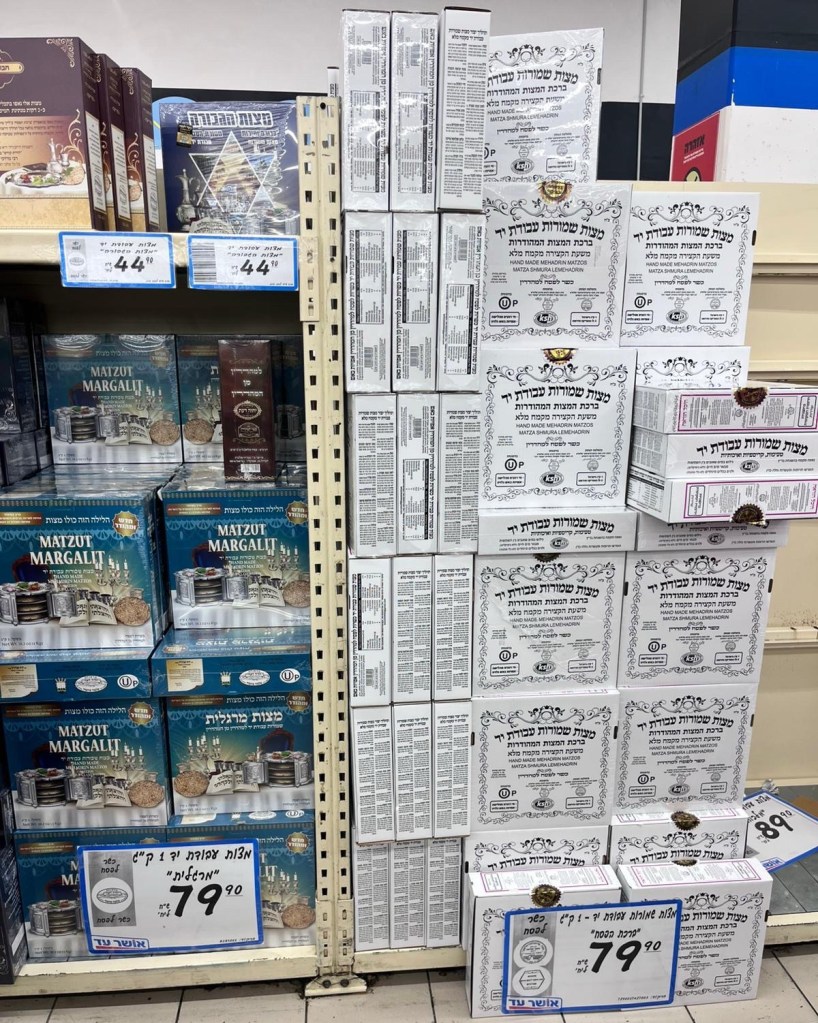
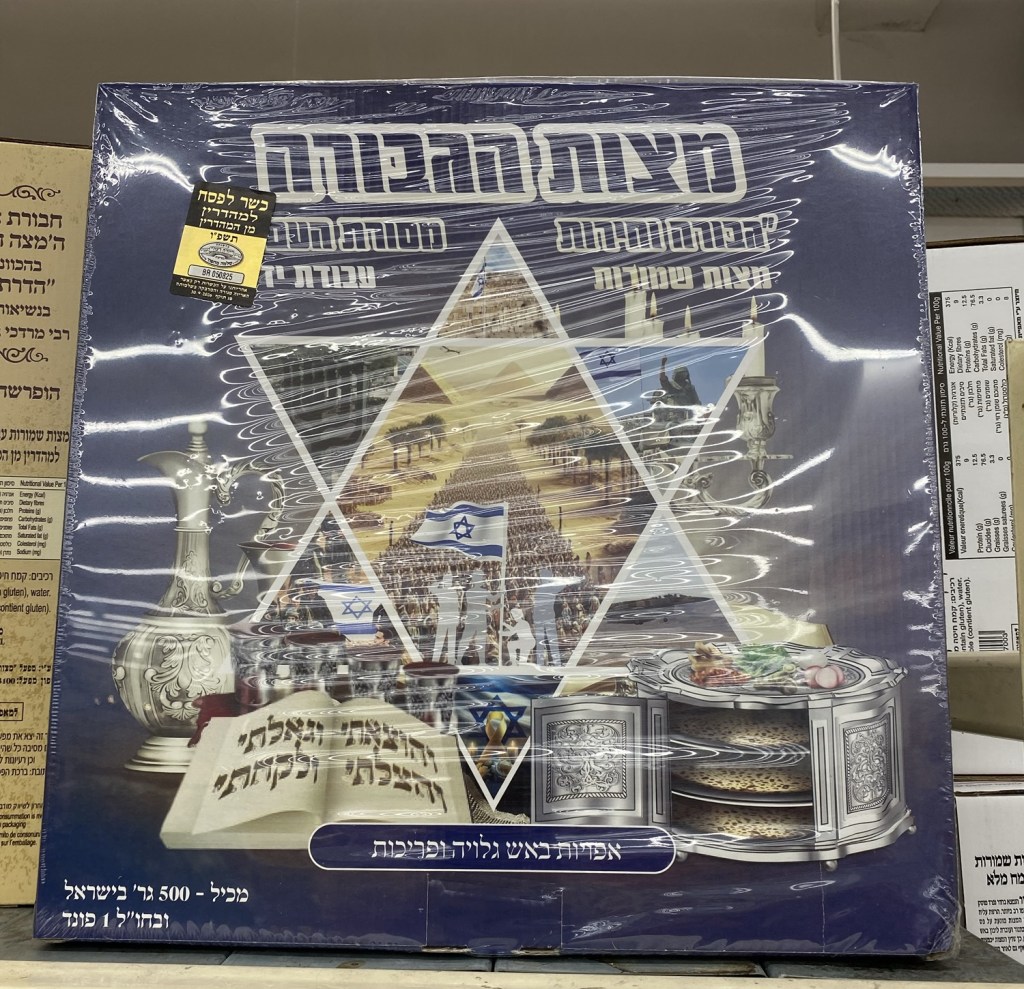
In addition, for Pesach 5786, they are marketing the same matzah in packages aimed at highlighting the bravery and success of Israel and the Israeli Defense Forces.
In an interesting twist, they also began selling “chaburah matzos.” This is a relatively new term used throughout the matzah baking industry to acknowledge that scrupulous individuals were involved in baking and maintained strict standards for that specific matzah run. Last year, Birchas Hapesach introduced their own “chaburah matzos.”
In order to bake it, they add groups of people to roll the matzah by hand, in addition to using their rolling apparatus.
This addition allows the bakery to market a different line of matzos, for a slightly higher price. Aside from the marketing benefits, it is hard to know if there is a halachic benefit that the chaburah adds. The people that are involved in rolling the matzah do not negate the fact that a machine rolls it, too. Those that do not mind the use of a basic machine do not gain by having people roll it. Those that would not want to use a matzah with any mechanical input should still shy away from this run also.
Families who care about the provenance of their matzah should consult their community practice. For many consumers, Birchas HaPesach matzah will be acceptable. The product combines human supervision and intent with practical equipment that increases consistency and supply. For those who follow stricter communal customs, the decision will depend on local minhag and on the guidance of their rabbinic authorities. In all cases transparency about the production methods can help your family make an informed choice.
Title photo credit: Yeshiva University Library Archives, available here.
 Rabbi Shmuel Maybruch's Blog